

Fluffy Whole Wheat Bread Recipe | Healthy Homemade Bakery-Style Loaf

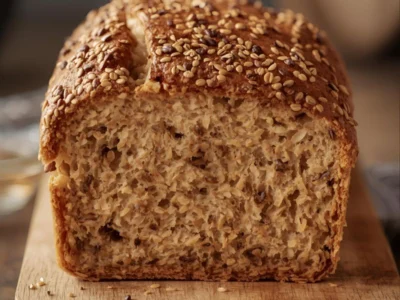
Bake the perfect whole wheat bread at home—soft, fluffy, and full of rich nutty flavor. This easy recipe uses simple pantry ingredients and step-by-step instructions for bakery-quality results. Whether you’re making sandwiches, toast, or enjoying it fresh out of the oven, this bread will become a family favorite.
👉 Want to master the art of baking? Explore all our bread and bakery recipes to level up your homemade baking game!
PREP TIME
20 minutes
COOK TIME
35 minutes
INGREDIENTS
7
Serves: 810


Ingredients
- 3 cups3 cups3 cups Whole Wheat Flour, sifted, for softer texture
- 1 cup1 cup1 cup White Whole Wheat Flour, all-purpose flour, optional, makes bread lighter
- 2.5 tsp2.5 tsp2.5 tsp Active Dry Yeast, make sure it’s fresh & active
- 1.5 cups1.5 cups1.5 cups Hot Water, around 110°F / 45°C
- 2 Tbsp2 Tbsp2 Tbsp Honey, sugar, for sweetness & yeast activation

- 2 Tbsp2 Tbsp2 Tbsp Olive Oil, or or melted butter, for richness
- 1.5 tsp1.5 tsp1.5 tsp Salt, fine grain works best
Buy Ingredients on the FoodSocial Market
Shop over 3500 products from unique and independent, creator-curated brandsProcess
- Step 1: Activate Yeast
- In a small bowl, combine 1.5 cups warm water (110°F / 45°C) with 2.0 tbsp honey.
- Stir in 2.5 tsp active dry yeast and let sit for 5–10 minutes until foamy.
- If it doesn’t foam, your yeast is inactive—start again with fresh yeast.
- Step 2: Mix Dry Ingredients
- In a large mixing bowl, whisk together 3.0 cups whole wheat flour, 1.0 cup all-purpose flour, and 1.5 tsp salt.
- This ensures the salt is evenly distributed before adding wet ingredients.
- Step 3: Form Dough
- Make a well in the flour mixture.
- Pour in the yeast mixture and 2.0 tbsp olive oil.
- Mix until a rough dough forms.
- Step 4: Knead
- Transfer dough to a lightly floured surface.
- Knead for 8–10 minutes until smooth, elastic, and slightly tacky (not sticky).
- You can also use a stand mixer with a dough hook (6–7 minutes on medium speed).
- Step 5: First Rise (Bulk Fermentation)
- Place dough in a greased bowl, turning once to coat.
- Cover with a damp towel or plastic wrap.
- Let rise in a warm spot for 60–90 minutes, or until doubled in size.
- Step 6: Shape Loaf
- Punch down dough gently to release air.
- Shape into a loaf by flattening into a rectangle and rolling tightly.
- Place seam-side down in a greased 9x5-inch loaf pan.
- Step 7: Second Rise (Proofing)
- Cover and let rise for 30–45 minutes, until dough domes about 1 inch above the pan rim.
- Don’t over-proof — if it rises too much, it may collapse during baking.
- Step 8: Bake
- Preheat oven to 375°F (190°C).
- Bake loaf for 30–35 minutes, until golden brown and hollow-sounding when tapped on the bottom.
- Internal temperature should reach 190–200°F (88–93°C).
- Step 9: Cool & Slice
- Remove from pan and cool completely on a wire rack for at least 1 hour before slicing.
- Cooling prevents gumminess and keeps slices neat.
Notes
-
Flour Choice
-
Whole wheat flour is denser than white flour. Blending with a little all-purpose flour keeps the bread soft.
-
For 100% whole wheat bread, increase hydration slightly (add 2–3 tbsp more warm water).
-
-
Yeast
-
Always check the expiration date. Old yeast won’t rise.
-
If using instant yeast, you can skip proofing and mix it directly into dry ingredients.
-
-
Water Temperature
-
Ideal range: 105–110°F (40–45°C). Too hot kills yeast; too cold slows rising.
-
-
Kneading
-
Proper kneading develops gluten, giving the bread structure and softness.
-
Test with the “windowpane test”: stretch dough between fingers; it should form a thin, see-through sheet without tearing.
-
-
Rising Environment
-
Dough rises best in a warm, draft-free place.
-
In cooler kitchens, place the bowl in a turned-off oven with the light on.
-
-
Proofing (Second Rise)
-
Don’t over-proof—dough should be puffy but still spring back slowly when gently pressed.
-
Over-proofing makes bread collapse after baking.
-
-
Baking Check
-
Bread is done when the internal temperature is 190–200°F (88–93°C).
-
If you don’t have a thermometer, tap the bottom—it should sound hollow.
-
-
Cooling
-
Always cool completely on a wire rack before slicing. Cutting too soon compresses the crumb and makes it gummy.
-
-
Storage
-
Store at room temp in a sealed bag for up to 3 days.
-
Freeze sliced bread in airtight bags; toast straight from frozen.
-
-
Flavor Variations
-
Add 2 tbsp of seeds (flax, chia, sesame, sunflower) for a nutty bite.
-
Brush the crust with melted butter after baking for a softer, richer loaf.
-
Add a Note
My Notes:
About This Recipe
| This is our estimate based on online research. | |
| Calories: | 3 |
| Fat: | 0 g |
| Carbohydrates: | 0 g |
| Protein: | 0 g |
| Cholesterol: | 0 g |
| Sodium: | 4 mg |
| Fiber: | 0 g |
| Sugars: | 0 g |
| Sugar Alcohol: | 0 g |
| Calculated per serving. | |
















Leave a Reply
You must be logged in to post a comment.