

Best Homemade Sourdough Bread Recipe | Crusty, Tangy & Artisan-Style

PREP TIME
30 minutes
COOK TIME
45 minutes
INGREDIENTS
4
Serves: 810


Ingredients
- 4 cups4 cups4 cups Bread Flour, Strong, high-protein flour

- 1.5 cups1.5 cups1.5 cups Water, Room temperature
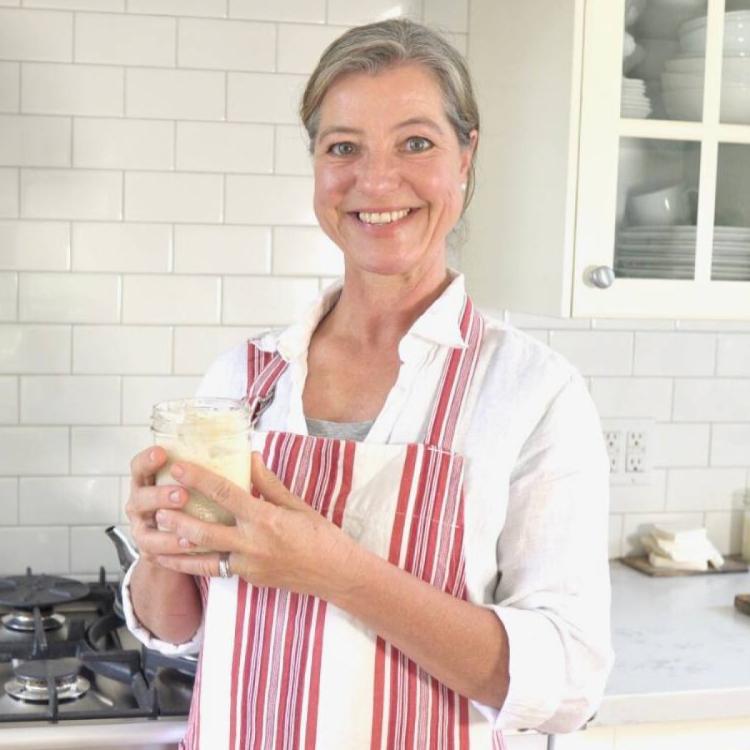
- 0.5 cup0.5 cup0.5 cup Sourdough Starter, Homemade, Active, bubbly, recently fed
- 1 tsp1 tsp1 tsp Salt, Fine sea salt or kosher salt
Buy Ingredients on the FoodSocial Market
Shop over 3500 products from unique and independent, creator-curated brandsProcess
- Step-by-Step Instructions
- 1. Autolyse (1 hour)
- In a large mixing bowl, combine 500 g bread flour and 350 g water.
- Mix until no dry flour remains. The dough will look shaggy and sticky.
- Cover with a towel and let rest for 1 hour.
- 👉 Why: This rest hydrates the flour and starts gluten development, making the dough easier to handle.
- 2. Add Starter & Salt
- After the autolyse, add 100 g active sourdough starter and 10 g salt to the dough.
- Mix thoroughly until incorporated. Use the “pinch and fold” method if the dough feels resistant.
- 👉 Tip: Wet your hands lightly to prevent sticking.
- 3. Bulk Fermentation (4–6 hours at 24°C / 75°F)
- Cover the bowl and let the dough rise at room temperature.
- During the first 2 hours, perform stretch-and-folds every 30 minutes: grab one side of the dough, stretch upward, and fold it over. Rotate the bowl and repeat 4 times.
- After the last fold, let the dough rest untouched until it has doubled in size, feels airy, and has visible bubbles.
- 👉 Note: Warmer kitchens will shorten fermentation time; cooler kitchens will lengthen it.
- 4. Pre-Shape & Bench Rest
- Gently turn the dough out onto a lightly floured surface.
- Shape it into a loose round ball (pre-shape).
- Let it rest uncovered for 20 minutes to relax the gluten.
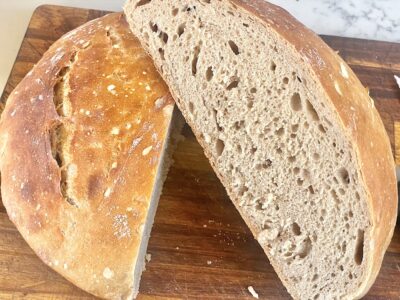
- 👉 Tip: Don’t over-handle—gentle movements keep gas in the dough, leading to an open crumb.
- 5. Final Shaping
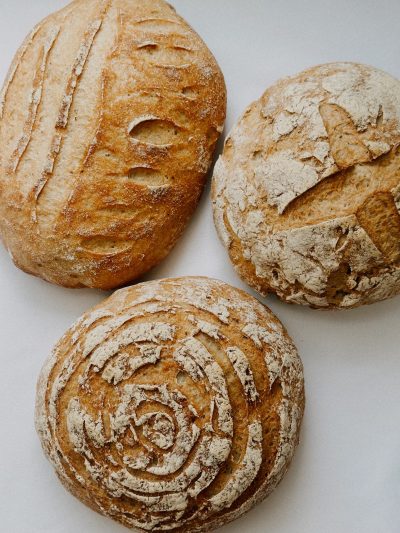
- Shape the dough into a tight round (boule) or oval (batard), depending on your basket.
- Place seam-side up in a well-floured banneton (proofing basket).
- Cover with a towel or plastic wrap.
- 6. Cold Proof (8–12 hours)
- Refrigerate overnight for a slow, cold fermentation.
- This step enhances sour flavor and makes scoring easier.
- 7. Bake (Dutch Oven Method)
- Preheat oven to 250°C (480°F) with a Dutch oven inside for at least 30 minutes.
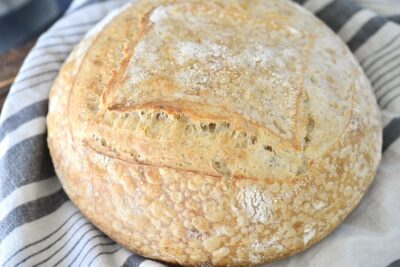
- Remove dough from fridge, invert onto parchment paper, and score the top with a razor blade (a deep slash down the center works best).
- Place into the preheated Dutch oven.
- Bake 20 minutes covered.
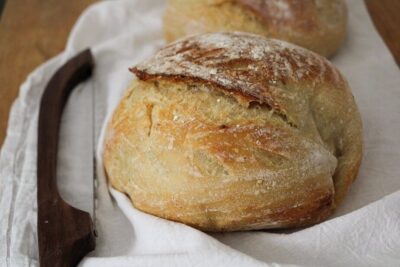
- Reduce to 230°C (450°F) and bake 20–25 minutes uncovered, until deep golden brown with crackling crust.
- 8. Cool Before Slicing
- Transfer loaf to a wire rack.
- Allow to cool for at least 1 hour before slicing—this finishes the baking process and prevents gumminess.
Notes
Recipe Notes & Tips
-
Flour Choice: Use strong bread flour (12–13% protein) for the best rise and structure. A blend of white and whole wheat or rye flour can boost flavor and nutrition.
-
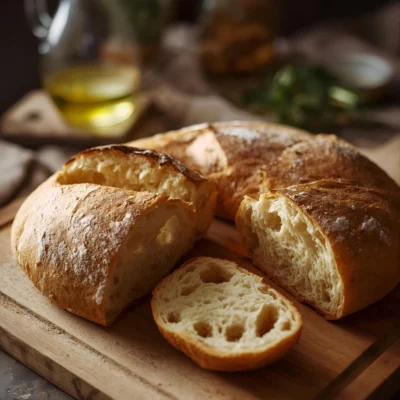
Hydration: This recipe has ~70% hydration, producing a chewy open crumb. If you’re new to sourdough, you can reduce water slightly (to 330 g) for easier handling.
-
Starter Activity: Your starter must be active and bubbly. Test it by dropping a spoonful in water—if it floats, it’s ready.
-
Fermentation Time: Bulk fermentation depends on temperature. At cooler room temps, it may take 7–8 hours; in warmer kitchens, 3–4 hours.
-
Stretch & Fold: Don’t skip these! They build gluten strength without kneading.
-
Cold Proofing: Refrigeration slows fermentation, deepens flavor, and makes the dough easier to score.
-
Baking Without a Dutch Oven: If you don’t have a Dutch oven, bake on a preheated baking stone with a pan of hot water on the oven floor to create steam.
-
Storage: Store cooled bread in a paper bag or wrapped in a kitchen towel at room temperature for 2–3 days. For longer storage, slice and freeze.
-
Serving Ideas: Delicious with butter, soups, cheeses, or as the base for gourmet sandwiches.
Add a Note
My Notes:
About This Recipe
| This is our estimate based on online research. | |
| Calories: | 5 |
| Fat: | 0 g |
| Carbohydrates: | 1 g |
| Protein: | 0 g |
| Cholesterol: | 0 g |
| Sodium: | 3 mg |
| Fiber: | 0 g |
| Sugars: | 0 g |
| Sugar Alcohol: | 0 g |
| Calculated per serving. | |















Leave a Reply
You must be logged in to post a comment.