

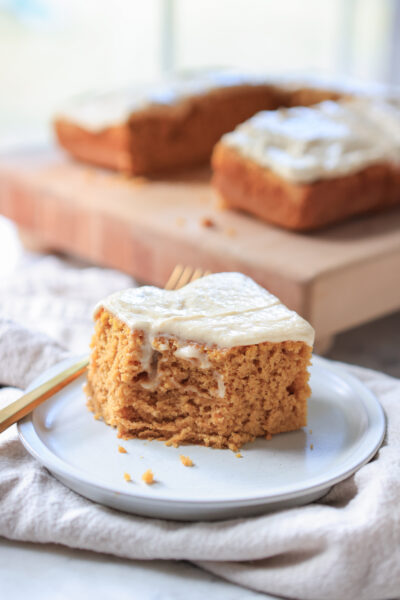
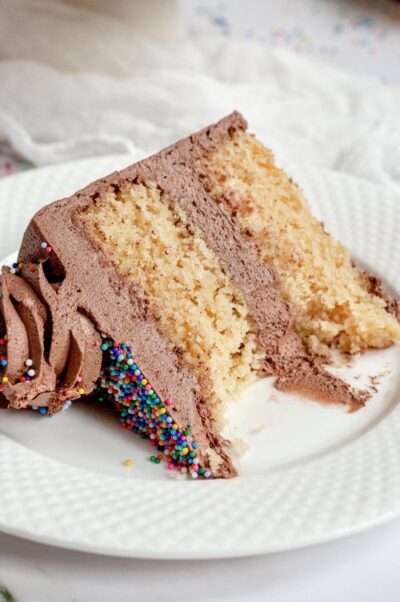
The Best Gluten-Free and Vegan Vanilla Cake (gluten-free, dairy-free, egg-free)
PREP TIME
20 minutes
COOK TIME
28 minutes
INGREDIENTS
14
Serves: 10


Ingredients
- 240 grams240 grams240 grams Gluten-Free All-Purpose Flour - Primal Palate, 2 cups spoon filled and leveled

- 2 tsp2 tsp2 tsp Baking Powder
- 1 tsp1 tsp1 tsp Baking Soda
- 1/4 tsp1/4 tsp1/4 tsp Himalayan Pink Salt, only add salt to this recipe if you can find unsalted plant-based butter
- 2/3 cup2/3 cup2/3 cup Oat Milk, Organic, I used the Oatly brand
- 1 Tbsp1 Tbsp1 Tbsp Apple Cider Vinegar
- 6 oz6 oz6 oz Plant-Based Butter, Unsalted, 1 1/2 sticks of butter, melted. Salted is fine if you cannot find unsalted, but eliminate the added salt from the recipe
- 200 grams200 grams200 grams Granulated White Sugar, 1 cup
- 1/3 cup1/3 cup1/3 cup Greek Style Yogurt, Plain Unsweetened - Kite Hill
- 1 1/2 Tbsp1 1/2 Tbsp1 1/2 Tbsp Pure Vanilla Extract
- 10 oz10 oz10 oz Plant-Based Butter, Unsalted, 2 1/2 sticks softened to room temperature. Salted will work fine if you can't find unsalted
- 1 tsp1 tsp1 tsp Pure Vanilla Extract
- 460 grams460 grams460 grams Powdered Sugar, 4 cups, sifted
Vegan Vanilla Buttercream frosting
Buy Ingredients on the FoodSocial Market
Shop over 3500 products from unique and independent, creator-curated brandsProcess
- Preheat your oven to bake at 350 degrees F, and lighly grease two 8 inch cake pans with avocado oil, and place a round of parchment paper on the bottom of each cake pan for easy removal of the cakes.
- In a small mixing bowl, whisk together the flour, baking powder, baking soda, and salt if you are able to find unsalted plant-based butter. If you can only find salted butter, then eliminate the added salt from this recipe.
- In a liquid measuring cup, whisk together the oat milk and apple cider vinegar. This will make a dairy-free buttermilk.
- Heat the plant-based butter in the microwave for 25 seconds, or on the stove top until its melted, but not steaming. It's also okay if there are some pieces that are not melted. You just want the majority of the butter to be liquid.
- Add the sugar to a large mixing bowl, and pour the melted butter over the sugar. Blend with a hand mixer to combine.
- Add in the greek-style yogurt, and blend again with the hand mixer. The yogurt will cause a small amount of separation with the butter. This is okay.
- Add in the vanilla extract, and blend again.
- Pour in the dairy-free buttermilk, and blend again to combine evenly.
- Sift in the flour mixture, and blend again, scraping down the bowl as needed, until you have a smooth cake batter.
- Divide the batter equally between the two cake pans, and smooth the tops into an even layer.
- Bake the cakes in the center of the oven, on the middle rack for approximately 28 minutes.
- Remove the cakes from the oven, and allow to cool completely before removing from the cake pans.
- In a stand mixer with the beater blade, or a large mixing bowl with a hand mixer, beat the plant-based butter, and vanilla.
- Add in 2 cups of sifted powdered sugar, and beat again, scraping down the bowl as needed.
- Add in the remaining 2 cups of powdered sugar, and beat again, scraping down the bowl as needed.
- Let the mixer run on medium-high speed for 4 minutes to really whip the frosting.
- Turn out one of the cakes onto a cake stand top down, and remove the parchment round from the cake.
- Smooth an even layer of frosting over the cake, and then place the second cake on top of the layer of frosting top down, and remove the parchment round from the cake.
- Use the remaining frosting to frost the outside of the cake. Top with fresh berries and mint leaves if desired.
- Keep the cake refrigerated, but the cake is best enjoyed at room temperature, so be sure to allow the cake to come to room temperature before serving.
Notes
As this cake does not use dairy or eggs, which are key ingredients for the flavor of a cake, it is important to use plant-based butter for this recipe rather than oil. You can use 2/3 cup of sunflower oil or avocado oil for this recipe if you don't want to use the plant-based butter, however the flavor of the cake will be different. I have tested this recipe with sunflower oil, and plant-based butter, and the plant-based butter results in a cake flavor more similar to a cake with dairy and eggs. The greek-style yogurt in this recipe acts as a replacement for eggs. I have not tested this recipe with flax eggs or aquafaba, but I have made vegan cupcakes with aquafaba, and I find the greek-style yogurt to result in a texture identical to cake with eggs, where as the aquafaba does not. My recommendation is to not substitute the yogurt with a flax egg or aquafaba. Granulated white sugar is a key ingredient for the texture of baked goods, so I don't recommend substituting it with a different sugar in my recipes. Granulated white sugar plays a really important role with how the baked good holds moisture, as well as leavening. I have not tested this recipe with maple sugar or coconut sugar, because I know it would negatively impact the texture of these cakes when I've already substituted so many key ingredients for baking a cake.
Add a Note
My Notes:
About This Recipe
| This is our estimate based on online research. | |
| Calories: | 501 |
| Fat: | 31 g |
| Carbohydrates: | 52 g |
| Protein: | 1 g |
| Cholesterol: | 0 g |
| Sodium: | 185 mg |
| Fiber: | 0 g |
| Sugars: | 40 g |
| Sugar Alcohol: | 0 g |
| Calculated per serving. | |
One response to “The Best Gluten-Free and Vegan Vanilla Cake (gluten-free, dairy-free, egg-free)”
Leave a Reply
You must be logged in to post a comment.


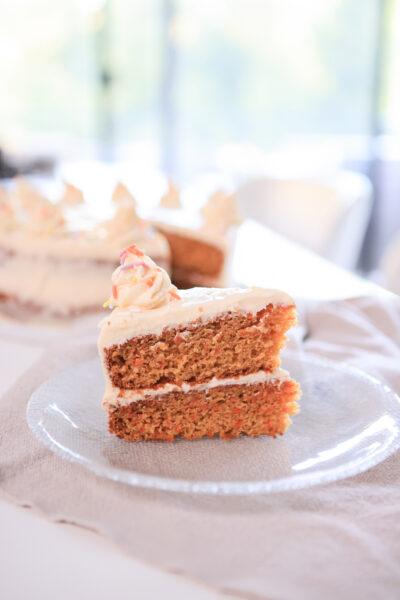






She is a BEAUTY!!!! WOW